

In Champagne, there are many appellations, including Grands Crus and Premiers Crus, which are often rightly considered a guarantee of superior quality. Over time, these terms have become benchmarks for both amateurs and connoisseurs, immediately evoking exceptional grapes, prestigious vintages, and winemaking expertise passed down from generation to generation. However, although these designations are now widely recognized and valued, few people really know their origin, the precise way in which they are awarded, or the history and logic behind these emblematic classifications of the Champagne vineyards.

The Grand Cru designation, which represents the highest level in the Champagne appellation classification system, and Premier Cru, have their origins in a historical system called the Echelle des Crus. This system was established in 1919, on the initiative of the Syndicat Général des Vignerons de Champagne, in the context of structuring and protecting the Champagne appellation (AOP). Originally, the main objective of this system was primarily economic: it was used to set the price of grapes paid to winegrowers during the harvest, while promoting the communes producing the grapes considered to be of the highest quality.
Unlike other French wine regions, such as Burgundy or Bordeaux, where classification is based on plots, climates, lieux-dits, or châteaux, the Champagne system is built on a radically different approach. In Champagne, classification does not concern individual plots or producers, but is based exclusively on the classification of wine-growing communes as a whole. It is therefore a collective rather than an individual recognition, based on the average wine quality of a village. This approach reflects the very history of Champagne, a region of blended wines, where the concept of terroir is expressed at the level of the village and its overall environment.
The Echelle des Crus is therefore a historical and collective recognition of the wine quality of Champagne villages, based on observation of harvests, consistent quality, and long-term reputation. This classification is neither temporary nor subject to annual review; it is based on decades of observation, winemaking practice, and qualitative feedback, which gives it particular legitimacy and stability.
To establish this ranking, each municipality was assigned a quality percentage, determined on the basis of several key criteria. These included the geographical location of the village, the exposure of the vineyards, the nature and composition of the soil, and the consistency of the quality of the grapes produced over successive vintages. These factors were combined to assess the ability of a terroir to consistently produce grapes suitable for making great champagnes.
On this basis, villages that scored 100% were classified as Grand Cru. Those with a score between 90 and 99% were classified as Premier Cru, while municipalities with a score between 80 and 89% were classified as Autres Crus. The latter nevertheless benefit fully from the Champagne AOC appellation, reflecting the fact that the entire Champagne vineyard meets demanding and rigorous specifications.
Thanks to this methodical, demanding approach based on long-term observation, very few villages have achieved the highest levels of this classification. Today, Champagne has only 17 Grand Cru classified communes, representing around 5% of the Champagne vineyards. Among them, 11 are located on the Montagne de Reims and 6 on the Côte des Blancs, two areas renowned for the exceptional quality of their terroirs. These include iconic villages such as Aÿ, Verzenay and Chouilly.
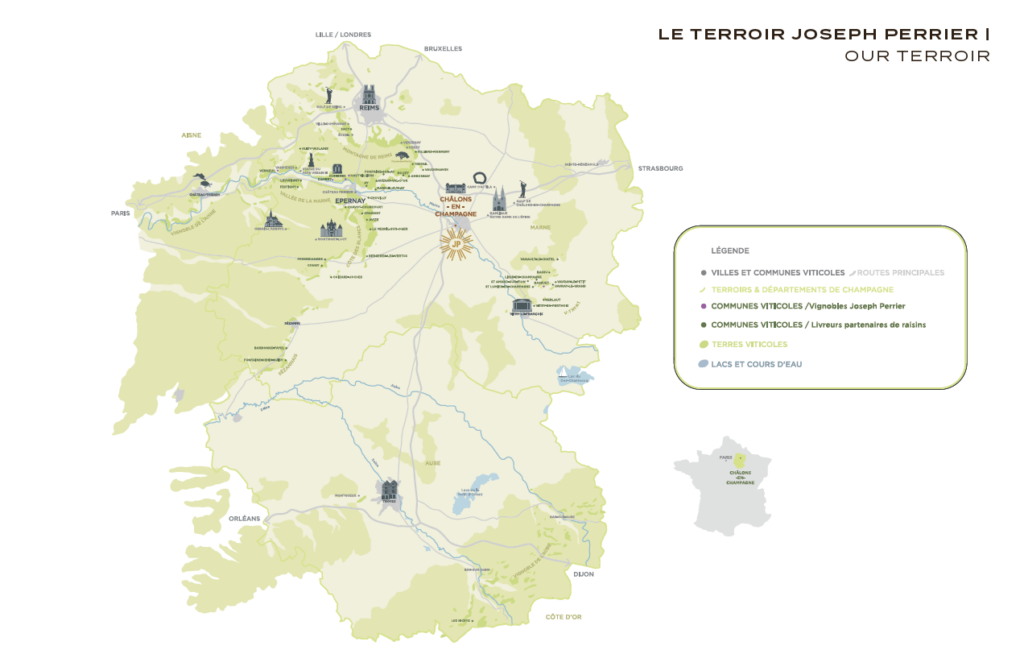
Champagne also has 44 communes classified as Premier Cru, mainly spread across the Montagne de Reims, the Côte des Blancs, and around Epernay, representing nearly 15% of the total vineyard area. Unlike the Grands Crus, which are exclusively located in the Marne department, the Premier Cru classified communes are more widely distributed and can be found not only in the Marne, but also in the Aisne, Aube, Haute-Marne and Seine-et-Marne departments. This geographical diversity illustrates the richness and plurality of the Champagne terroirs.
However, it is essential to emphasize that the terms Grand Cru and Premier Cru can only appear on a bottle label if 100% of the grapes used come from communes classified at this level. This strict rule guarantees the authenticity of the origin, the traceability of the grapes, and fidelity to the claimed terroir. It also protects consumers by ensuring perfect consistency between the appellation mentioned and the actual origin of the grapes.
Although the Echelle des Crus has not been used to directly set prices since 2004, due to its non-compliance with EU competition law, the Premier Cru and Grand Cru designations still retain official legal status, recognized by the Institut National de l'Origine et de la Qualité (INAO). They also remain a key benchmark for the entire Champagne wine industry, both in terms of quality and economics.
In practice, each year, the price per kilo of grapes is set by municipality, according to a calculation that is historically based on the old classification. This price is officially published by prefectural decree. The Comité Interprofessionnel des Vins de Champagne (CIVC) sets a base price, corresponding to one kilogram of grapes classified as "Grand Cru," from which the prices of other municipalities are adjusted proportionally. Thus, grapes from Grand Cru communes are paid at 100% of the base price, while those from Premier Cru communes are paid between 90% and 99% of the same price. The cost of grapes therefore remains closely linked to their appellation and the historical quality of their terroir.
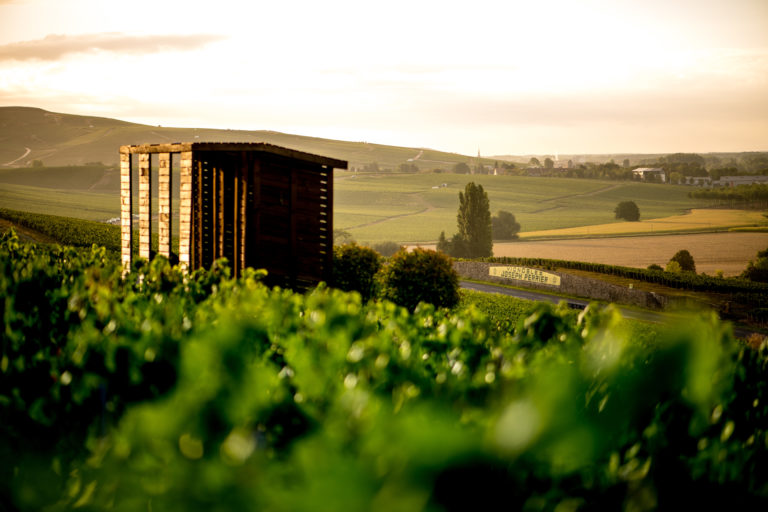
The Joseph Perrier house owns family vineyards in the heart of some of these exceptional communes, notably in the historic villages of Cumières, Hautvillers, and Damery, all classified as Premiers Crus, as well as in Chouilly, one of the rare villages classified as Grand Cru. These privileged terroirs provide the house with high-quality raw materials, essential for the production of its iconic cuvées.
They enable Joseph Perrier to express, through its champagnes, all the richness and diversity of the Champagne terroirs, while perpetuating a vision based on tradition, elegance, and excellence, faithful to the spirit and history of Champagne. Through its respect for these classified terroirs and their heritage, the house places its cuvées in a historical continuum, where the classification of crus remains above all a tool for understanding and promoting the Champagne vineyards.

To access the JOSEPH PERRIER website, you must be 18 or over.PLEASE enter your date of birth
We use cookies
Cookie Policy and Privacy Policy
ALCOHOL ABUSE IS DANGEROUS FOR YOUR HEALTH. CONSUME IN MODERATION. Sale of alcoholic beverages to minors under 18 years of age is prohibited. Proof of age is required at the time of online sale CODE DE LA SANTÉ PUBLIQUE.ART L.3342-1 ET L.3353-3